Hammersmith Broadway removals guide for tight access jobs
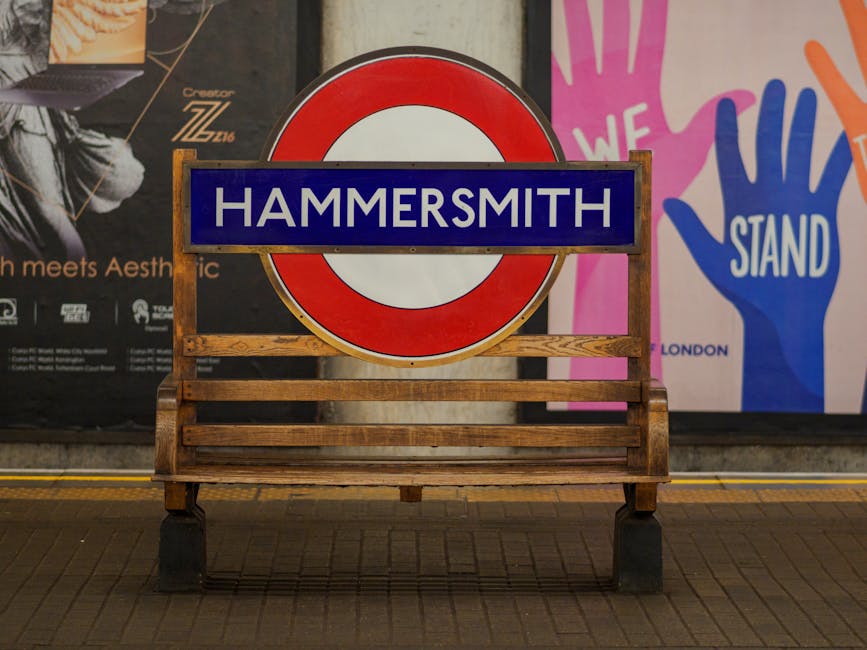
If you are planning a move around Hammersmith Broadway, you already know the problem is rarely the packing alone. It is the stairs, the narrow turning space, the shared entrances, the lift that is either tiny or occupied at the worst possible moment, and the quiet pressure of trying not to block a busy road for too long. A Hammersmith Broadway removals guide for tight access jobs needs to be practical, not vague. That is what this article is for.
Whether you are moving from a flat above a parade of shops, a modern apartment with awkward loading access, or a business unit that sits behind a tight service entrance, the right plan makes a huge difference. A few small decisions early on can save you a lot of stress later. Truth be told, tight access moves are usually less about strength and more about sequence, patience, and the right vehicle choice.
In the sections below, you will find a clear guide to handling access checks, parking realities, lifting routes, packing choices, and when a smaller vehicle or a man and van service in Hammersmith W6 may be a better fit than a larger removal lorry. You will also see how to avoid the mistakes that turn a straightforward local move into a long, frustrating day.
Practical takeaway: if access is tight, the move should be planned around the building first and the boxes second. That mindset changes everything.
Why Hammersmith Broadway removals guide for tight access jobs Matters
Hammersmith Broadway sits in a part of London where movement is constant. Buses, taxis, delivery vans, pedestrians, side streets, loading pressure, and the usual London rhythm all compete for space. That matters because removal work depends on timing and access more than most people expect.
Tight access jobs are not automatically difficult, but they are less forgiving. A van that is too large, a parking plan that has not been thought through, or a sofa that looks "probably fine" on the day can quickly become a delay. And delays are not just annoying; they can create knock-on problems with building access, neighbours, building management, or your own schedule if you are between properties.
This is why local knowledge matters. A team used to removal services in Hammersmith W6 will usually think in terms of route length, staircase width, lift capacity, and how many carrying runs are realistically needed. That is the kind of detail that keeps a move moving.
There is also a real emotional side to it. If you are already juggling handover times, keys, and maybe a bit of last-minute decluttering, the last thing you need is a moving day where everyone stands around guessing what will fit. A good plan reduces that uncertainty. Nice and simple, really.
Table of Contents
- Why Hammersmith Broadway removals guide for tight access jobs Matters
- How Hammersmith Broadway removals guide for tight access jobs Works
- Key Benefits and Practical Advantages
- Who This Is For and When It Makes Sense
- Step-by-Step Guidance
- Expert Tips for Better Results
- Common Mistakes to Avoid
- Tools, Resources and Recommendations
- Law, Compliance, Standards, or Best Practice
- Options, Methods, or Comparison Table
- Case Study or Real-World Example
- Practical Checklist
- Conclusion
- Frequently Asked Questions
How Hammersmith Broadway removals guide for tight access jobs Works
The process is best understood as a chain. Each link matters. If one step is weak, the whole move becomes slower and more stressful.
1. Assess access before moving day
Start with the building itself. Check the width of corridors, staircases, landings, lifts, door frames, and any corners where furniture will need to pivot. If there is an underground or rear loading area, find out whether it is genuinely usable for a vehicle, or only useful in theory. Small difference, big impact.
For larger homes or multi-room moves, it may help to look at a broader house removals service in Hammersmith W6 so the job can be planned around the volume and access constraints together, rather than treating them separately.
2. Match the vehicle to the access
Tight access usually points toward a smaller van, a careful load plan, or multiple trips rather than one oversized lorry. That does not mean you compromise on safety. It means the vehicle is chosen to suit the site. For some jobs, a dedicated removal van in Hammersmith W6 is exactly the right answer.
3. Protect the route
Good movers protect walls, bannisters, floors, and door edges because tight access often means contact points. In older buildings, you may also find uneven flooring or narrow communal spaces, so the route needs to be treated with care.
4. Load in the right sequence
Items that are awkward, heavy, or fragile should be loaded with the route in mind. If your largest wardrobe is going to be dismantled, that should happen before the van arrives, not after everyone is already sweating near the pavement at 8:30 in the morning.
5. Adjust in real time
Good removals work is flexible. Sometimes a lift is out of service. Sometimes a hallway is narrower than expected. Sometimes a parking bay is occupied. A calm crew will adapt, re-order the load, or split the move into sensible stages rather than forcing a bad plan.
Key Benefits and Practical Advantages
There are a few very clear benefits to handling tight access jobs properly. They are practical, not flashy, but they matter a lot on the day.
- Less risk of damage: careful planning reduces knocks to furniture, walls, and flooring.
- Faster loading and unloading: the right route and vehicle reduce unnecessary back-and-forth.
- Better safety: fewer awkward lifts, fewer rushed turns, fewer near misses on stairs.
- Less disruption to neighbours or building users: especially important in shared blocks and busy streets.
- More accurate time planning: you can estimate the job more realistically when access is understood early.
- Lower stress: and let's face it, a calmer move feels better even if the box count is the same.
Another advantage is flexibility. A tightly managed move can often be split into stages. That helps if you need storage, if you are waiting for keys, or if you want to move priority items first. If that applies, it is worth considering storage options in Hammersmith W6 as part of the plan rather than as an afterthought.
Who This Is For and When It Makes Sense
This guide is especially useful if you are dealing with one or more of the following:
- a flat above shops or offices near Hammersmith Broadway
- a building with a narrow staircase or a small lift
- a property with limited roadside space for loading
- a move involving large furniture in a compact building
- office contents that need careful coordination around staff or opening hours
- a partial move where only certain items are going out
- a last-minute relocation with little margin for error
It also makes sense for people comparing local service styles. Some moves suit a full team and a larger vehicle; others are better handled by a more nimble setup. If your move is small but awkward, a man with a van in Hammersmith W6 can be a sensible option because the service is often more adaptable for tight streets and short load distances.
Office moves can be just as tricky. In fact, they often involve more timing pressure because desks, IT equipment, files, and staff access all have to be balanced. For that kind of scenario, it is worth looking at office removals in Hammersmith W6 as part of the wider planning picture.
Step-by-Step Guidance
Here is a practical way to approach a tight access move around Hammersmith Broadway.
- Walk the route in advance. Measure key pinch points. If possible, take a quick look from pavement to front door, then from front door to the final room.
- List the difficult items. Sofas, beds, wardrobes, glass tables, large mirrors, and white goods deserve special attention.
- Decide what should be dismantled. Sometimes a wardrobe that seems impossible becomes manageable once taken apart. Sometimes it does not. Be honest about which is which.
- Choose the vehicle around access, not just volume. A slightly smaller vehicle that can park properly may beat a larger one that causes delays.
- Pack for carrying, not just storage. Use sturdy boxes, keep heavy items low, and avoid overfilling. Boxes that are too heavy are a classic headache on stairs.
- Reserve the right time window. Early arrivals can help avoid congestion, but building rules and neighbour tolerance matter too.
- Protect the building. Use covers, blankets, and route protection where needed. In a tight hallway, every inch matters.
- Load in the right order. Put the items you need first at the most accessible point in the van.
- Keep communication simple. One person should coordinate if possible. Too many voices can slow things down a bit.
- Have a fallback plan. If access turns out worse than expected, know whether items can be stored, split, or carried in a second run.
That last point is easy to overlook. But it is often what saves the day. A move does not have to be perfect; it just has to be controlled.
Expert Tips for Better Results
Below are the little details that tend to separate a smooth move from a messy one. None of them are glamorous. All of them help.
Measure the awkward stuff twice
It sounds obvious, but corners lie. A sofa may fit through a straight doorway and still fail at the landing turn. Measure the narrowest point, not the easiest one.
Disassemble earlier than you think
Bed frames, shelving, and bulky furniture take longer than people expect when the screwdriver comes out on moving day. If you have the option, dismantle in advance. Your future self will thank you.
Use a clear loading order
Keep essentials and fragile pieces separate from heavy, stable items. If the access is tight, there is less room for rummaging around mid-load.
Protect the corners, not just the walls
Door frames, banisters, and turn points are where damage happens. The scuff you notice later is often caused by one awkward swing in a narrow gap.
Think about neighbours and shared spaces
In busy blocks, one quiet courtesy call or a friendly note can make a difference. Not every situation needs a full conversation, but a little consideration goes a long way.
Do not assume the "shortest route" is the best route
Sometimes a slightly longer carry is easier than a cramped short cut through a restricted passage. The fastest-looking path is not always the fastest in real life. Funny how that works.
If you are moving a home and want a broader picture of the local service options, removals in Hammersmith W6 can be a useful starting point for understanding what kind of support fits your job.
Common Mistakes to Avoid
Most tight access problems are predictable. That is the good news. The bad news is that people still repeat the same mistakes.
- Booking the wrong vehicle size. Too large can be worse than too small if it cannot access the property safely.
- Ignoring staircase turns and lift dimensions. A tape measure takes minutes; a failed carry takes much longer.
- Leaving dismantling until moving day. This is one of the biggest sources of delay.
- Overpacking boxes. Heavy boxes on stairs are awkward and risky.
- Forgetting about parking and unloading space. It is not just where the van goes, but where it can stop without causing problems.
- Not identifying the difficult items in advance. These are usually the items that create the stress.
- Assuming someone else has checked access. That assumption has caused many a frazzled morning.
There is also a quieter mistake: underestimating how long tight access takes. A move that would normally be straightforward can become a slower, more careful job. That is not a failure. It is just reality.
Tools, Resources and Recommendations
You do not need a van full of specialist equipment, but a few tools make tight access moves much easier.
| Tool or item | Why it helps | Best use |
|---|---|---|
| Measuring tape | Checks doorways, stairs, and furniture sizes | Before booking and before loading |
| Furniture blankets | Helps protect items and building surfaces | Carrying through narrow corridors |
| Straps and ties | Secures items inside the van | Preventing shifting on short or bumpy routes |
| Labels and marker pens | Makes boxes easier to sort | Speeding up unloading in compact spaces |
| Basic tool kit | Supports last-minute dismantling | Bed frames, shelving, and fittings |
| Floor protection | Reduces wear in shared or delicate areas | Entrances, hallways, and stair landings |
On the service side, it can help to compare a few related options depending on the size and complexity of the job. If you want a broader overview, removal companies in Hammersmith W6 can give context for the kind of support available locally. For smaller, simpler jobs, man and van in Hammersmith W6 may be the more practical fit.
And if you are still in the planning stage, a quick visit to the contact page is often the easiest way to ask about access, timing, and vehicle suitability without making assumptions.
Law, Compliance, Standards, or Best Practice
For tight access removals, the main compliance concerns are usually practical rather than complicated. You are typically dealing with parking rules, building access policies, health and safety awareness, and the general duty to avoid causing damage or obstruction.
Because local circumstances can vary, it is sensible to check any building-specific rules in advance, especially if you live in a managed block, a converted building, or a property with shared access. Some locations have loading restrictions, limited waiting space, or concierge procedures that need to be respected. A good mover will ask about these early, and that is a positive sign.
From a best-practice point of view, the key expectations are straightforward:
- do not block access routes unnecessarily
- handle items safely and with enough people for the weight and shape involved
- protect shared surfaces where appropriate
- communicate clearly with building managers or residents when needed
- avoid forcing oversized items through unsuitable routes
It is also wise to be cautious with anything that could be fragile, heavy, or awkward. If a lift is small or the stairwell is tight, forcing the issue is never the smart move. Ever. A careful extra minute is much better than a broken frame or a damaged wall.
Options, Methods, or Comparison Table
Different access situations call for different approaches. The right choice depends on the property, the volume, and how much time you have to work with.
| Method | Best for | Strengths | Trade-offs |
|---|---|---|---|
| Small van with careful carrying | Compact flats, narrow streets, light-to-medium loads | Flexible, easier parking, good for tight access | May need more careful load planning or extra trips |
| Man and van service | Smaller moves, partial loads, awkward access | Adaptable, usually quick to organise, practical for local jobs | Less suitable for very large household moves |
| Full removal team | Large homes, offices, multiple heavy items | More hands, more structure, better for complex jobs | Requires stronger planning and space coordination |
| Split move with storage | Delayed completion, staged relocations, downsizing | Reduces pressure on moving day, helps with timing gaps | More planning and handling stages |
If your move is small but still tricky, the balance often tips toward a more flexible local solution. If you are handling a bigger property, then a more comprehensive service may be the safer bet. For people moving from one home to another in the area, house removals in Hammersmith W6 can be more suitable than trying to improvise a piecemeal approach.
Case Study or Real-World Example
Consider a typical Hammersmith Broadway scenario. A couple is moving from a second-floor flat above a mixed-use building. The front entrance is narrow, the lift is small, and the road outside is busy by mid-morning. They have a sofa, a bed, a chest of drawers, several boxes of books, and a desk that definitely looked smaller in the showroom.
Instead of arriving with a large vehicle and hoping for the best, the move is planned around access. The sofa is measured in advance, the bed is dismantled the day before, and fragile items are grouped into clearly marked boxes. The van is chosen for manoeuvrability, not just capacity.
On the day, the crew protects the hallway corners, uses the lift only for suitable items, and carries the heavier pieces in a calm sequence. There is a brief pause when the desk needs a different angle at the staircase landing. Nothing dramatic. Just a small reset, a bit of patience, and the right turn. That is usually how these moves go when they are handled properly.
The whole job finishes without damage, and the owners are not left with that drained, slightly dazed feeling that sometimes follows a badly managed move. To be fair, that is the real win: not perfection, just a day that stays under control.
Practical Checklist
Use this checklist to prepare a tight access move near Hammersmith Broadway.
- Measure all major furniture items
- Check stair width, lifts, and key turns
- Confirm parking or unloading options
- Identify shared access points and building rules
- Choose the most suitable vehicle size
- Dismantle bulky furniture before moving day if possible
- Pack heavy items into smaller boxes
- Label boxes by room and priority
- Protect fragile pieces separately
- Keep a basic tool kit and tape nearby
- Plan for storage if there is a gap between moves
- Keep contact details handy for the mover and building manager
Quick reminder: if the access feels borderline, treat it as borderline. That mindset prevents unpleasant surprises.
Conclusion
A tight access move around Hammersmith Broadway does not have to be stressful. It does, however, need proper planning. Once you understand the building layout, the vehicle choice, the carrying route, and the items most likely to cause friction, the rest becomes much easier to manage.
The best moves are rarely the fastest-looking ones. They are the ones where everyone knows the plan, the awkward bits are handled early, and nobody is trying to improvise with a sofa in a narrow corridor at the last minute. If you remember that one thing, you are already ahead.
Whether you are relocating a flat, a family home, or a small office, the smartest next step is to talk through access before moving day. That simple conversation can save time, money, and a fair amount of stress. And honestly, it tends to make the whole experience feel a lot more human.
Get a free quote today and see how much you can save.
If you are ready to take the next step, explore the wider removals services in Hammersmith W6 and choose the option that matches your access, timing, and load. A bit of clarity now makes everything easier later.
Frequently Asked Questions
What counts as a tight access removal job?
A tight access job is any move where the route is restricted in some way, such as narrow staircases, small lifts, limited parking, awkward turns, or a difficult loading point. It can happen in flats, converted buildings, offices, or mixed-use properties.
How do I know if my furniture will fit through the stairs or lift?
Measure the widest and longest parts of the item, then compare those figures with the narrowest points on the route. Do not forget turning space at landings. A item can be fine in a straight line and still fail at a corner.
Is a smaller van better for tight access around Hammersmith Broadway?
Often, yes. A smaller van can be easier to position, load, and unload in a busy area. The best vehicle is the one that suits the access conditions, not just the total amount of stuff you have.
Should I dismantle furniture before moving day?
If there is any doubt about access, dismantling bulky furniture early is usually a smart move. Beds, shelving, and some wardrobes are much easier to handle in parts than in one piece.
Can a man and van service handle tight access moves?
Yes, many smaller moves are well suited to a man and van service, especially if the load is modest and access is awkward. It is a practical choice when flexibility matters more than raw capacity.
What should I tell the removal team before the job starts?
Share the number of floors, lift size, parking situation, awkward items, any building rules, and whether there are time limits or shared entrances. The more accurate the information, the smoother the day usually goes.
What happens if parking is limited near my property?
That is common in busy London areas. The team may need to use a smaller vehicle, park a little further away, or plan a shorter loading window. It is better to plan for limited parking than hope for a lucky break.
Do I need storage if my move is split across different days?
Not always, but it can be very helpful if there is a gap between leaving one property and entering the next. Storage gives you breathing room and reduces pressure on the moving day itself.
Are office moves harder than home moves in tight access buildings?
They can be, because office moves often involve more equipment, more timing coordination, and more people needing access at the same time. Careful scheduling matters a lot.
How early should I book a tight access removal?
As early as you can, especially if you expect limited parking, building restrictions, or a time-sensitive handover. Early booking gives you more room to plan properly and avoids a last-minute scramble.
What is the biggest mistake people make with difficult access?
Assuming the move will work itself out on the day. It usually does not. Access needs to be checked, the vehicle needs to be suitable, and the route needs to be planned before anything is lifted.
Where can I get help if I am not sure what service I need?
If you are uncertain about the best setup for your move, reach out through the contact page and explain the access details as clearly as you can. A quick conversation can make the next step much easier.